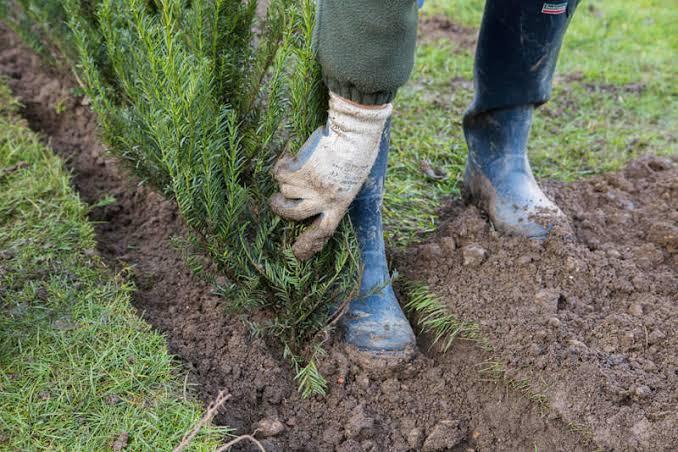
Bare-root hedging plants are sold dormant, without soil, from late autumn to early spring. They are a cost-effective way to create a boundary, and they establish quickly once the soil warms. A little preparation makes all the difference.
Why bare-root
Dormant plants lose little water and settle in before the growing season. They are lighter to transport, available in larger quantities and usually better value than container-grown equivalents. The trade-off is a short planting window and the need to look after the roots until they are in the ground.
Prepare the ground
- Clear a strip about a metre wide of weeds and grass. Perennial weeds should be dug out or killed off first.
- Fork over compacted soil and add a layer of compost or well-rotted manure.
- Mark the line of the hedge with string.
Looking after the plants before planting
Roots must not dry out. If you cannot plant straight away, keep the bundle in its bag in a cool, sheltered place, or heel the plants in a trench with soil covering the roots. Soak roots in a bucket of water for an hour or so before planting.
Planting
- Dig a trench or individual holes wide enough to spread the roots out fully.
- Plant each tree to the soil mark visible on the stem.
- Space plants according to the species: typically three to five per metre; native mixes are often planted in a double staggered row at around five per metre.
- Backfill, firm with your heel or hands, and water well, even in winter.
- Mulch with a 5 to 7cm layer of compost or bark, keeping it away from the stems.
First-year pruning and aftercare
Many whips are cut back by about a third after planting to encourage branching from the base, although you should follow your supplier's advice for each species. Keep the base free of weeds and water thoroughly in dry weather during the first two summers. Trim formal hedges in late summer and informal ones in winter, avoiding the bird-nesting season from March to August.
Choosing a hedge
Hornbeam makes a dense, formal hedge that tolerates clay. A native mixed hedge supports far more wildlife, with blossom, berries and nesting cover. Rosa rugosa offers scent and hips where you want an informal barrier.
Plants mentioned in this guide
Useful supplies
This guide is general advice for typical UK conditions. Results vary with your soil, local climate and the weather, and it is not a substitute for the instructions that come with any product.