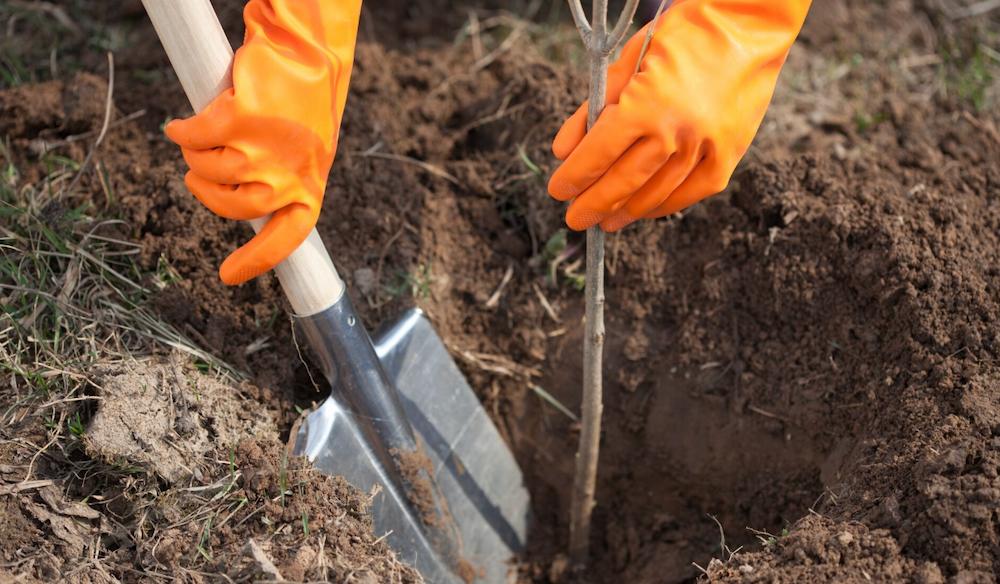
Clay soil gets a bad press, but it is rich in nutrients and holds water through dry spells. The challenge is that it is slow to warm in spring, sticky in winter and baked hard in summer. Work with it rather than against it, and it can grow superb gardens.
Understand what clay does
Clay particles are tiny, so heavy soil has very little air between them. In winter it can sit waterlogged, starving roots of oxygen. In summer it shrinks and cracks, tearing fine roots. Plants that cope are those that tolerate seasonal wet or have tough, fibrous roots.
Plant wide, not deep
- Dig the hole twice as wide as the root ball but no deeper, and fork over the sides and base so roots can escape into surrounding soil.
- Do not fill the base with gravel or sand; it can turn the hole into a sump that collects water.
- Plant at the same depth as in the pot, or very slightly proud on the wettest sites.
- Firm gently with your hands rather than stamping, which compacts clay further.
Feed the soil from the top
Spread 5 to 7cm of compost, leaf mould or well-rotted manure over the surface each autumn or spring. Worms pull it down and slowly open up the structure. Digging in sand rarely helps; in practice it can create something closer to concrete, whereas organic matter builds a lasting crumb structure.
Reliable plants for clay
Perennials and grasses
Black-eyed Susan (Rudbeckia fulgida 'Goldsturm'), hardy geraniums such as 'Rozanne', hostas, hellebores and feather reed grass (Calamagrostis 'Karl Foerster') all cope well with heavy ground.
Shrubs and hedging
Red-barked dogwood tolerates wet winters, while hornbeam is a native hedging plant that thrives on clay, holding its russet leaves through winter. Panicle hydrangeas, viburnums and honeysuckle also do well.
Timing matters
Autumn is the ideal time to plant in clay: the soil is still warm, rain is on the way and roots can establish before summer cracking. Spring planting works too, provided you water during the first dry summer. Water deeply and infrequently so roots chase moisture downward.
Raised beds as a shortcut
On very wet sites, a raised bed filled with improved soil gets plants out of standing water. Add a drainage route at the bottom of the bed rather than sealing it, and mulch every year.
Plants mentioned in this guide
Useful supplies
This guide is general advice for typical UK conditions. Results vary with your soil, local climate and the weather, and it is not a substitute for the instructions that come with any product.