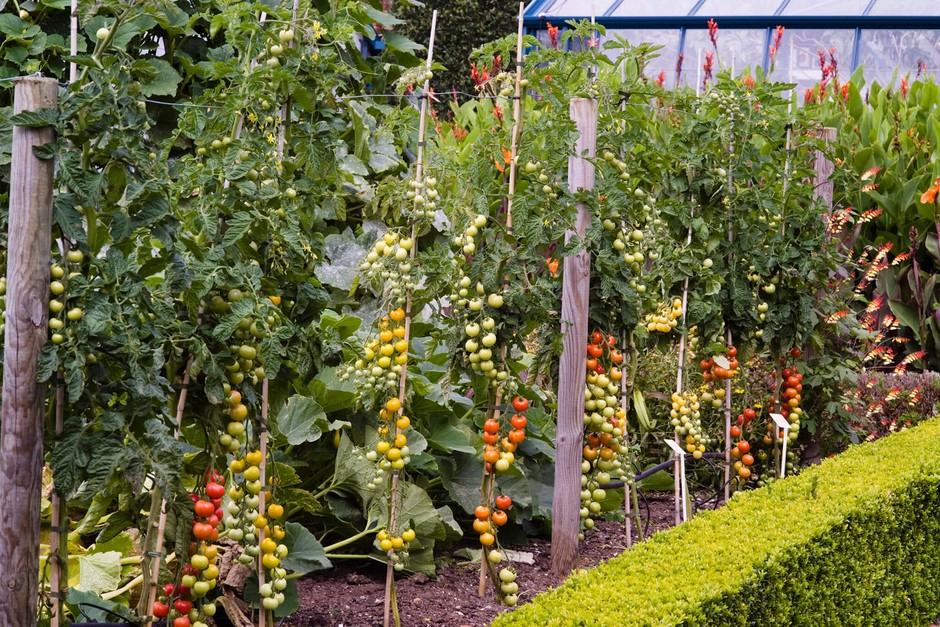
Tomatoes are the most popular crop for UK gardeners, and with the right timing they crop well in a greenhouse, a sunny sheltered spot or even a large pot by the back door. The secret is a warm start and steady watering.
Sowing and early growth
Sow seed in March or April in a heated propagator or on a warm, bright windowsill. Once seedlings have their first true leaves, move each into its own small pot and keep them in good light so they stay stocky. Harden off gradually for a week to ten days before moving outdoors.
Choosing varieties
- Cordon (indeterminate) varieties grow tall on a single stem, suiting greenhouses and sheltered walls; 'Gardener's Delight' is a popular cherry cordon.
- Bush (determinate) varieties are more compact, suiting pots and hanging baskets.
- Blight-resistant varieties are worth considering for outdoor growing in wet regions.
Planting out
Wait until the last frost has passed: late May in the milder south and west, and often into June further north or inland. Plant deeply, burying part of the stem, because tomatoes root from the stem and become more stable. Leave about 45cm between plants and support each with a strong cane or string.
Everyday care
- Water regularly at the base of the plant; uneven watering causes split fruit and blossom end rot.
- Pinch out the side shoots on cordon types when they are small.
- Feed weekly with a high-potash tomato feed once the first flowers set.
- Remove lower leaves as they yellow to improve airflow.
- Pinch out the growing tip of outdoor cordons in mid-August so that the remaining fruit can ripen.
Blight and other problems
Late blight spreads in warm, humid and wet weather, causing brown patches on leaves and fruit. Grow plants with good air circulation, avoid wetting the foliage, and remove and bin affected leaves promptly. Greenhouses should be ventilated daily. Green tomatoes at the end of the season can ripen indoors in a drawer or bowl with a banana.
Plants mentioned in this guide
Useful supplies
This guide is general advice for typical UK conditions. Results vary with your soil, local climate and the weather, and it is not a substitute for the instructions that come with any product.