Summers are getting warmer and drier in many parts of the UK, and water is a precious resource. The good news is that most gardens can thrive on much less water than we typically give them, if we water deeply and design smartly.
Water deeply, not often
A light sprinkle encourages shallow roots. A thorough soaking, enough to wet the soil to a depth of a few centimetres at least, encourages roots to go deeper where they can find moisture. Check by digging down with a trowel after watering: soil should be damp below the surface.
Know your priorities
- New plants, for the first one to two years until their roots are established.
- Containers and hanging baskets, which dry out quickest.
- Vegetables, soft fruit and anything flowering or fruiting.
- Established shrubs, trees and lawns usually cope without extra water except in prolonged drought.
Save water
- Mulch with 5 to 7cm of compost, bark or leaf mould to reduce evaporation.
- Water at the roots rather than overhead, using a can, a soaker hose or drip irrigation.
- Collect rainwater in a water butt fed from a downpipe.
- Let lawns go brown in drought; they usually recover when the rain returns.
Choose drought-tolerant plants
Mediterranean plants such as lavender, rosemary, salvia, catmint and sedum thrive in dry, free-draining soil once established. Grey, silver or fleshy leaves are often a sign a plant copes well with dry conditions.
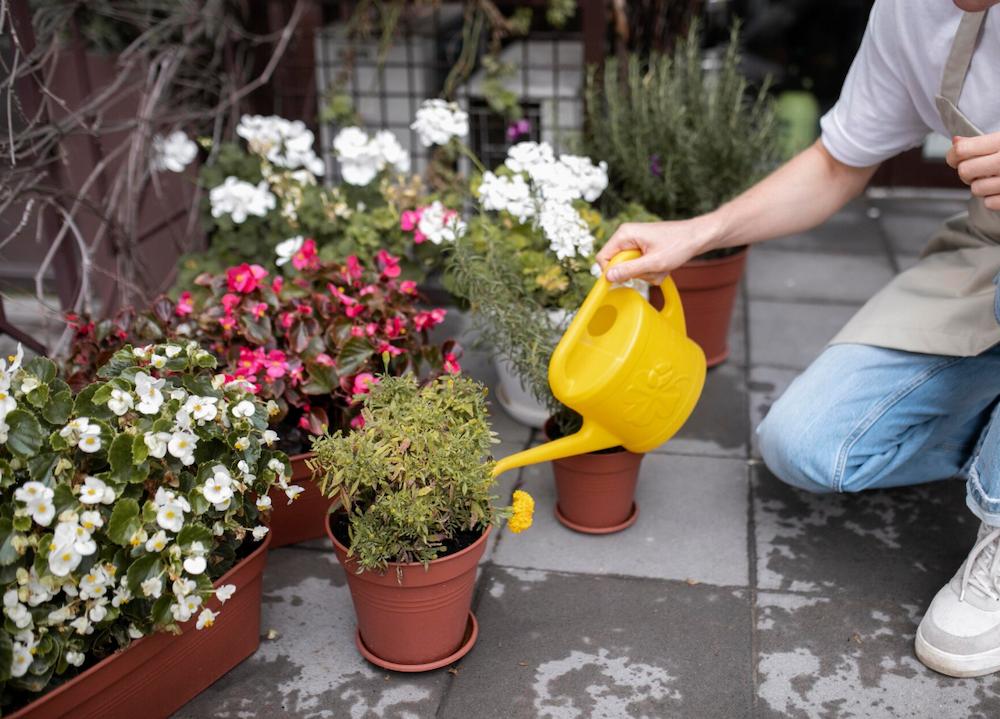
Watering pots
Lift the pot to judge weight, push a finger into the compost and water thoroughly until it runs from the base. Group pots together in a shady spot during heatwaves, and avoid standing in saucers of water for long periods.
Plants mentioned in this guide
Useful supplies
This guide is general advice for typical UK conditions. Results vary with your soil, local climate and the weather, and it is not a substitute for the instructions that come with any product.