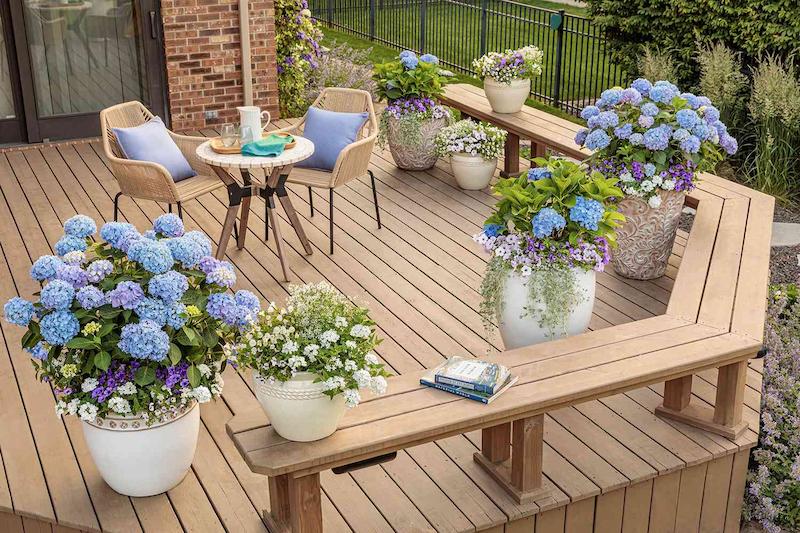
Pots transform paved gardens, balconies and entrances. With a little planning, a handful of containers can provide colour and scent in every season and are easy to change as the year progresses.
Choose the right pot
Larger containers hold more compost and water, so they are more forgiving. Terracotta is attractive and breathable, though it dries quicker. Glazed and plastic pots retain more moisture. Whatever you choose, check there are drainage holes and consider frost-resistance if the pot will stay outside in winter.
Compost and drainage
Use fresh, good-quality peat-free multi-purpose compost, or a loam-based compost for long-term plants such as shrubs. Add a handful of grit for herbs and Mediterranean plants. Lining the base with crocks is not necessary; a piece of mesh over the holes will keep compost in. Leave a gap of around 3cm below the rim for watering.
A simple planting recipe
- Thriller: one tall, bold plant such as a dahlia or an ornamental grass for height.
- Fillers: mounding plants such as geraniums, salvias or winter pansies.
- Spillers: trailing plants to soften the edge.
- Add scent: lavender or rosemary near seating.
Think about the site
Match plants to light. In sun, lavender, rosemary, sedum and salvias are ideal. In shade, hostas, hellebores and ferns thrive. Exposed balconies need low, wind-tolerant plants, and heavy pots help prevent toppling.
Seasonal changeovers
Plant winter pansies and bulbs in autumn for colour through spring, then switch to summer bedding, dahlias or lilies once the frost risk has passed. A large pot of permanent shrubs or evergreen herbs gives structure while small pots are swapped by season.
Watering and feeding
Container plants rely on you. In summer check pots daily, watering until water runs from the base, and feed every week to two weeks with a liquid feed from about six weeks after planting. In winter, water sparingly and keep pots off the ground to avoid waterlogging.
Plants mentioned in this guide
Useful supplies
This guide is general advice for typical UK conditions. Results vary with your soil, local climate and the weather, and it is not a substitute for the instructions that come with any product.