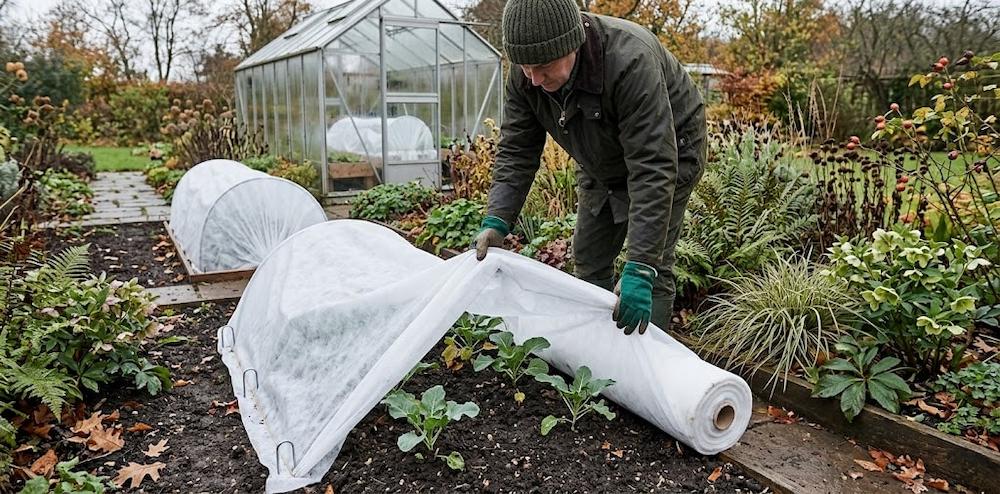
British winters range from mild and wet in the south-west to bitter and snowy in the Highlands. Knowing how hardy a plant is, and how to protect it before the first hard frost, can save many favourites.
What hardiness ratings mean
The RHS uses ratings from H1 to H7. Plants rated H4 are hardy through most of the UK in an average winter, H5 through most of the UK even in colder winters, and H7 is hardy in even the severest UK conditions. H3 and below need protection from frost, and H2 plants should be kept frost-free altogether. Remember that ratings are guidance: cold, wet soil is often more damaging than low temperatures alone.
Look at your garden
Cold air flows downhill and pools in hollows, creating frost pockets. Walls, buildings and larger shrubs create warmer microclimates, particularly in cities. Free-draining soil and shelter from cold winds give tender plants a better chance.
Practical protection
- Mulch the crowns of herbaceous plants, such as dahlias that stay in the ground, with 10 to 15cm of bark, compost or leaves.
- Wrap borderline-hardy shrubs loosely in horticultural fleece, with a double layer in colder spells.
- Raise pots onto feet and cluster them near the house. Wrap with fleece or bubble wrap and leave the drainage holes clear.
- Lift or move frost-tender plants such as pelargoniums and tender salvias into a frost-free greenhouse, porch or windowsill before the first frost.
- Water less in winter; wet roots are more vulnerable to freezing.
Protecting spring blossom
Late frosts can ruin blossom on fruit trees and the tender new shoots of shrubs. Fleece on a frosty evening and removed in the morning gives some protection. Avoid planting tender plants outside until the risk of frost has passed, typically late April to mid-May in the south and later further north and inland.
Heavy snow
Gently brush snow from evergreens and hedges before it weighs down branches. Leave frozen foliage alone until it has thawed naturally.
Plants mentioned in this guide
Useful supplies
This guide is general advice for typical UK conditions. Results vary with your soil, local climate and the weather, and it is not a substitute for the instructions that come with any product.